
Beginner's Guide to Local Dialect Phrases You'll Hear at the Market
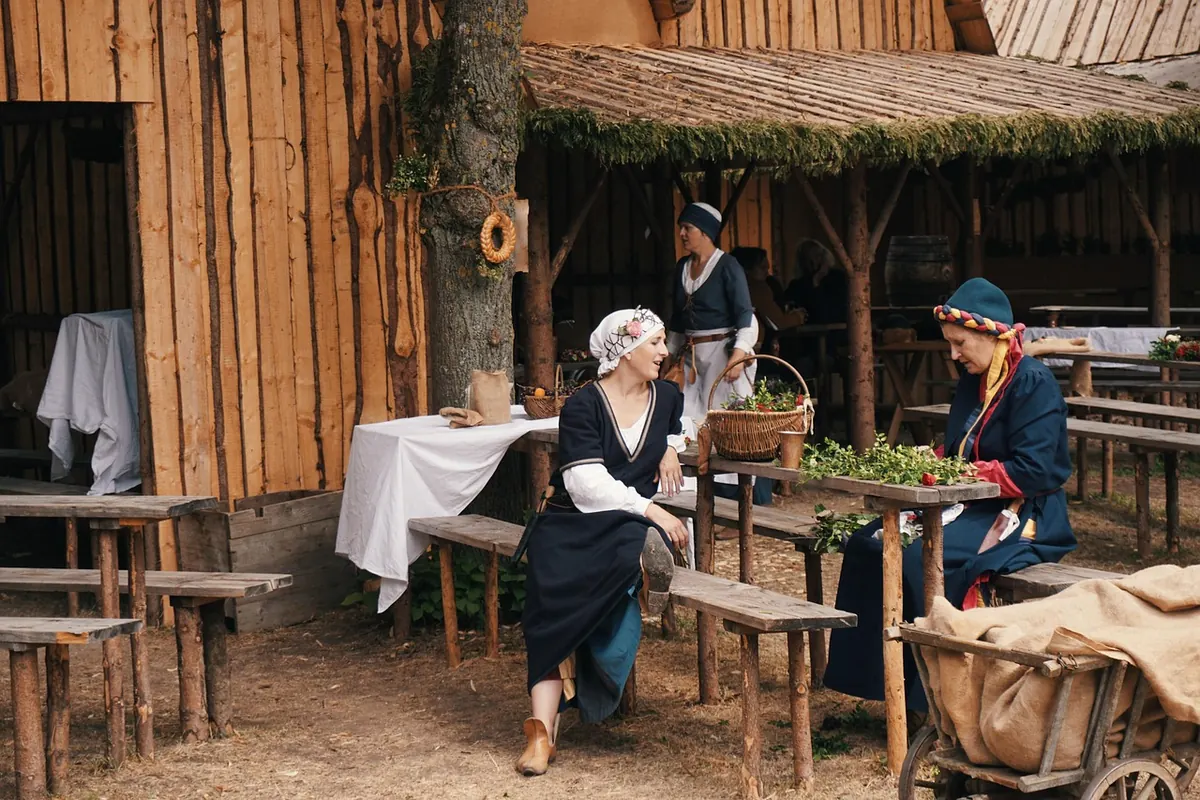
At eight on a Saturday morning the market is already loud. Crates land on the cobbles, a van door slams, and someone behind a pyramid of peaches is calling out to a woman with a wheeled shopping bag. She answers, they both laugh, and you catch none of it. The Italian you have been practising is only half of what is being spoken here. The other half is the local dialect, and it is not being performed for visitors. It is simply how the market talks when it is talking to itself.
You do not need to speak it. Nobody expects you to. But ten words, used at the right moment and with the right face, will change your Saturday. Here is what you are hearing, and how to join in without making a nuisance of yourself.
The Market Runs on Two Languages
Italy's dialects are not bad Italian. They are separate languages with their own grammar, vocabulary and history, and they differ so much that a market forty kilometres away may use words you will not hear in this one. Treat everything below as a starting point rather than a rulebook, and confirm it with the person in front of you.
The important thing to understand is the switching. A vendor will haggle in dialect with a regular, then turn to you and speak clear Italian. That is a courtesy, not a cold shoulder. Dialect is the language of belonging, and being answered in Italian means you have been classified as a guest — politely. If you offer a greeting in dialect and get a smile and an Italian reply, you have won. If you get a long stream of dialect back, you have won slightly too much: say sono straniero, I'm a foreigner, and everyone will laugh and help.
Greetings: The First Ten Seconds
Greetings are free. You cannot get them wrong in a way that matters, and they buy you more goodwill than any amount of vocabulary. Listen at the first stall for a minute before you say anything, and you will hear which one belongs here.
- Uè — a casual northern "hey", used between people who know each other. Fine as a reply, risky as an opener.
- Uagliò — from guaglione, "lad", in the south. Vendors use it the way a friendly uncle would.
- Ciao caro / ciao cara — warm, common, and safe from almost anyone behind a stall.
- Bèl / bedda — "handsome", "beautiful", used in the north-east and in Sicily as an affectionate form of address, not a comment on your looks.
- Fioi — "lads", in the Veneto, often shouted at a group of friends.
- Vecio — literally "old one", between men in the north-east, entirely friendly.
- Ajò — Sardinian for "let's go", also "come on then".
- Daje — Roman for "come on", "go on", "yes!".
You will also hear titles shortened to a single syllable: signò for signore, dottò for dottore. In much of central and southern Italy this is normal market speech, not disrespect, and a cheerful signò, un etto di quello will get you served faster than a formal sentence.
Food, Quantity and the Words That Sell
The market has its own units, and getting them right matters more than any greeting. An etto is a hundred grams, and asking for un etto of salami or cheese is how locals buy a small amount for lunch. A mazzetto is a small bunch — parsley, basil, radishes. A cartoccio is the paper cone that olives, fried things and roasted chestnuts arrive in.
Then there are the words a vendor uses to sell. Nostrano or roba nostra means it came from here, from their own land or their own kitchen. Fresco di giornata means picked or made today. Di stagione means in season, and asking whether something is di stagione is a genuinely useful question rather than a rhetorical one. In Rome and further south you will hear bono instead of buono: questo è bono, this is good. Answering è bono davvero after a taste is the shortest route to being remembered.
“Signò, assaggia questo. È roba nostra.” — the kind of line you will hear a dozen times before lunch.
The Sounds of Approval, Surprise and Doubt
Much of market dialect is not sentences at all but noise: short exclamations that carry the whole emotional content of a conversation. Ammazza, in Rome, means something like "wow" or "good grief". Mamma mia works everywhere, for delight and despair alike. Magari means "if only" or "maybe", depending entirely on tone. Boh is a shrug in one syllable, and macché is a friendly dismissal: no, nothing of the sort.
Two warnings. First, the strong words. Every dialect has its swear words and its blasphemies, and in parts of Italy casual blasphemy in a market is far more offensive than it would be at home. Recognise them, do not repeat them. Ligurian belin or Sicilian minchia may sound like decoration to your ear; they are not, and using them badly is worse than not using them at all.
Second, the local oath that everyone uses and nobody explains. If a vendor says it while dropping a crate on their foot, it is not an invitation to join in. A sympathetic wince and che disastro will do fine.
Asking, Tasting and Getting Out of the Way
Asking to taste
Tasting is normal, grabbing is not. Stand back from the stall, catch the vendor's eye, and ask posso assaggiare? Then wait to be offered. If they hand you a piece of fruit, take it with a thank you, taste it properly, and say something true about it. A vendor who has just watched you enjoy an olive will give you a better price on the cheese.
Moving through a crowd
Saturday markets are narrow, and the correct word is permesso, delivered while already moving, with a hand raised slightly. Scusi is for bumping into someone; permesso is for asking the crowd to open. Both work in dialect-speaking stalls exactly as they do elsewhere.
Paying and leaving
Hold out your money rather than dropping it on the counter. If you want the vendor to choose the amount or the piece for you, scelga lei does the job. Leaving a few coins with tenga il resto is a small kindness, not an obligation. And when you go, grazie, buona giornata — or, if you plan to come back, ci vediamo sabato, see you Saturday. That last sentence is worth more than any phrase in this guide.
Trying It Yourself Without Overdoing It
- Learn five phrases, not fifty. A greeting, un etto, quanto viene?, grazie, and one compliment. That is a complete market personality.
- Open in dialect, finish in Italian. Warmth at the start, precision for the details. Nobody minds a mixed sentence; everybody minds a stranger performing an accent.
- Match the volume, not the drama. Markets are loud, so speak up, but keep the gestures small until you know people.
- Repeat the correction. If a vendor says the word back to you properly, say it again their way and thank them. Being taught is the whole point.
- Follow the switch. If the reply comes back in Italian, stay in Italian. They are being kind.
- Ask before you assume. Come si dice? — how do you say it? — is the most useful phrase you can carry, and it flatters the person you ask.
A Short Script for Your First Saturday
Pick one stall with an older vendor and a short queue. Wait your turn, then: buongiorno, followed by whatever greeting you heard earlier — uè, ciao caro, signò. Ask for un etto of something, then quanto viene? Pay, say grazie, buona giornata, and leave. That is the entire exercise, and it takes ninety seconds.
Do it three Saturdays running at the same stall and something shifts. The vendor will greet you first, will remember what you bought, and will start telling you which tomatoes are better today. That is the moment dialect stops being a list of phrases in a guide and becomes the reason you get up early on a Saturday. Go slowly, keep your voice low until you know the room, and let the market teach you the rest.
Photo: derleooo / Pixabay