
Local History Checklist: 7 Sources for Tracing Your Borgo's Past
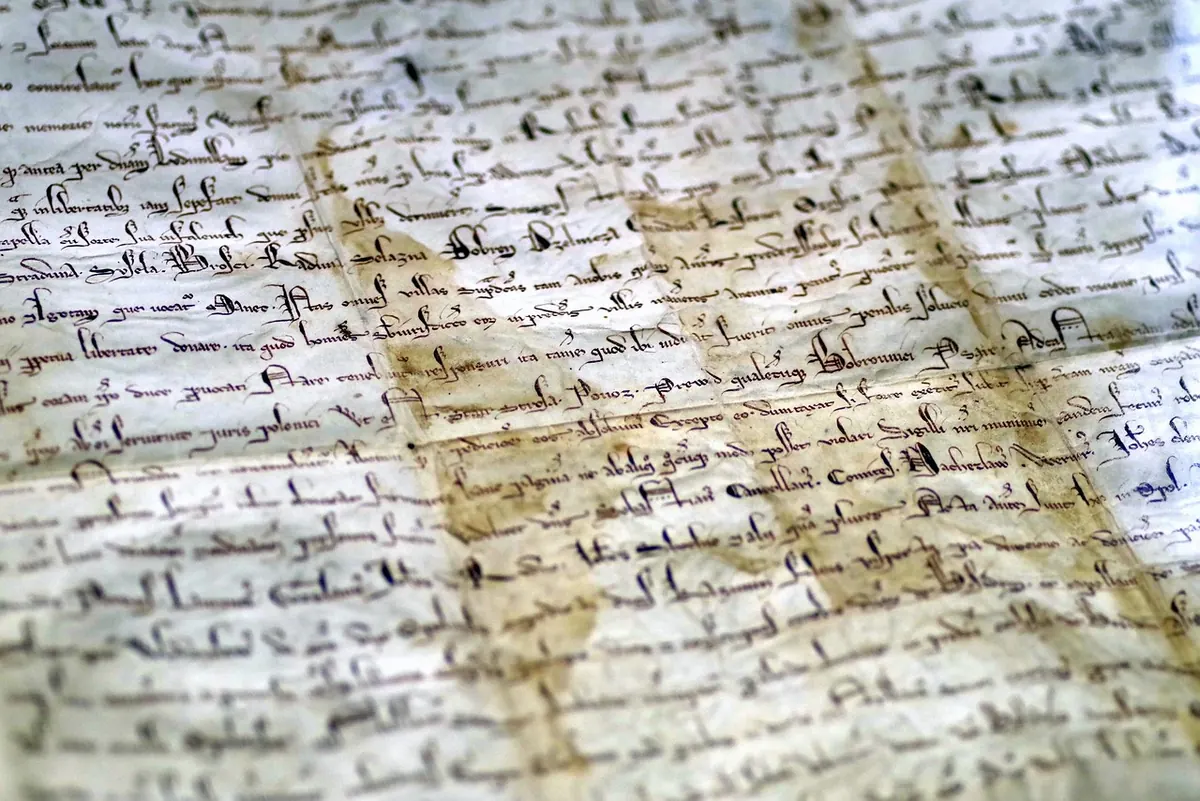
Every borgo keeps two histories. One of them is printed on the sign at the edge of the village, the one that gives the altitude, the number of residents and the name of the patron saint. The other is scattered across a parish cupboard, a town hall basement, a shoebox in someone's kitchen and a memory that is currently being lost because nobody has asked the right question yet.
The second history is the one worth chasing, and it is more findable than most people expect. Small places generate fewer documents than cities, but they also lose fewer — no great fire, no wholesale redevelopment, and often a surprisingly complete run of records kept by people who never threw anything away. What follows is a working checklist of sources, roughly in the order I would approach them. You do not need to be a historian to use it. You need patience, a notebook and the willingness to knock on doors.
1. Start at the Comune, where the borgo files itself
The town hall is the first stop, and not only for the obvious reason that it holds the anagrafe registers. Ask specifically for the archivio storico comunale, the older section of the municipality's papers, which may be inventoried, boxed and forgotten, or may be sitting in a former classroom in labelled bundles tied with string.
What you want there is the ordinary paperwork of local government: council minutes, contracts, school records, lists of taxpayers, building applications, correspondence about the water supply. Council minutes are the most underrated source in a small village. They tell you when the road was paved, whose land was expropriated, which feast day was funded and which was argued about for three sessions running.
Questions that get answers
Arrive with one precise question rather than a general request for "everything about the village". Archivists and clerks respond far better to "I would like to see the council minutes for 1928 to 1931" than to a vague enquiry. Write a short email in advance, say who you are and what you are researching, and ask whether an appointment is needed and whether there is an index. Remember that recent registers are subject to privacy restrictions and that many small comuni have transferred older holdings to a provincial archive or a local documentation centre — one phone call saves a wasted journey.
2. Parish registers and the diocesan archive
Baptisms, marriages and burials were recorded by the parish long before the state took an interest. The registers give you names, dates, godparents and the occasional revealing marginal note. More valuable still, where they survive, are the status animarum — household-by-household surveys compiled by the priest — which let you reconstruct who lived under one roof, including the widows, servants and elderly relatives that a modern family tree tends to lose.
Do not overlook the incidental records: accounts for the church fabric, lists of confraternity members, the priest's own chronicle. Many parish priests kept a running diary of local events, and those diaries are pure gold, full of weather, funerals, epidemics and complaints about the choir.
Phone before you visit and ask what exists for the years you need. Survival varies enormously — fire, flood, war and mould have all taken their share — and the books may be at the parish, at the diocesan archive, or on deposit somewhere else entirely. Handle everything with clean, dry hands, and never put a register back on the shelf in a different order from the one you found.
3. Maps, cadastral records and aerial photographs
A map will show you the borgo as a set of relationships rather than a set of buildings. The nineteenth-century cadastral survey, whatever its local name, gives you plot numbers, owners and — the detail I love most — field names. Those names are a vocabulary of the landscape: the place where the walnuts grew, the slope that flooded, the strip that belonged to the church.
Layer that with early twentieth-century topographic maps, which often mark mills, kilns, springs and mule tracks that no longer exist, and with aerial photographs from the 1950s. Those photographs are startling. They show a village before the post-war rebuild, when the hay barns stood where the car park is now. Compare them with the same view today and the last seventy years of change become visible in a single glance.
4. Notary deeds, military lists and emigration files
This is where you move to the Archivio di Stato for the province. Notary records are the richest and most intimidating source on this list. Wills, dowries, property sales and household inventories survive in enormous quantities, and an inventory can be unexpectedly intimate: a bed, three copper pots, a chest, two sacks of grain, a gun.
For the nineteenth and twentieth centuries, ask about the military conscription lists drawn up by birth year. They typically record a young man's height, occupation, literacy and father's name, which is a useful way of tracing someone sideways when the parish registers thin out. If your family emigrated, look for passport registers, ships' passenger manifests and the comune's register of citizens abroad.
Order documents in advance using the reference numbers from the archive's inventory. Nothing wastes a morning faster than arriving without a busta number.
5. Photographs, postcards and the family shoebox
Ask everyone you meet whether there is a shoebox. Then scan what you find, at a good resolution, and name each file immediately with the owner's surname and the date: an unnamed photograph is decorative, a named one is evidence.
Date a photograph from its details rather than its caption. Look at the photographer's stamp on the mount, the style of the postcard, the vehicles, the street lamps, the shop signs, the state of the church facade. Then sit the owner down with the image in front of them and ask what they see. The photograph is only the prompt; the conversation is the source.
6. Oral history: record the people who remember
This is the most urgent work, because it has a deadline. Record with whatever you have — a phone is fine — and begin each recording by saying the date, the place and the name of the person speaking. Keep sessions to about an hour, do two rather than one long sitting, and ask permission before you publish anything.
Ask open questions, then stop talking. Do not correct the storyteller; write down the version they give and compare it later with the version someone else gives. Variations between accounts are not errors to be eliminated but evidence of how the village understood itself.
- What did the borgo look like from the road when you were a child?
- Which shops were open, and who ran them?
- Where did people get water, and where did they wash clothes?
- What happened on the feast day, from morning to night?
- Who left, and where did they go?
- What has disappeared that you miss?
Write down the dialect words and the place names as they are spoken, spelling them as best you can. Those names are often the only surviving trace of a field, a path or a workshop.
A practical order of work
- Write down what you already know and the single question you most want answered.
- Talk to living relatives and neighbours first — they will save you weeks in the archives.
- Work through the comune, then the parish, then the Archivio di Stato.
- Add the maps last, so you can place the names you have collected onto the ground.
- Keep a running list of every source you consult, with the reference numbers and the date you looked.
Write up your findings as you go, even in rough notes. Two years from now you will not remember which register gave you that date. Before publishing anything about living people, or reproducing a photograph you were lent, ask the owner's permission — and take a copy of the borgo back to them. That courtesy is what keeps the next researcher's door open.
Photo: Arcaion / Pixabay