
Traditions Explained: Why Village Processions Still Follow the Old Route
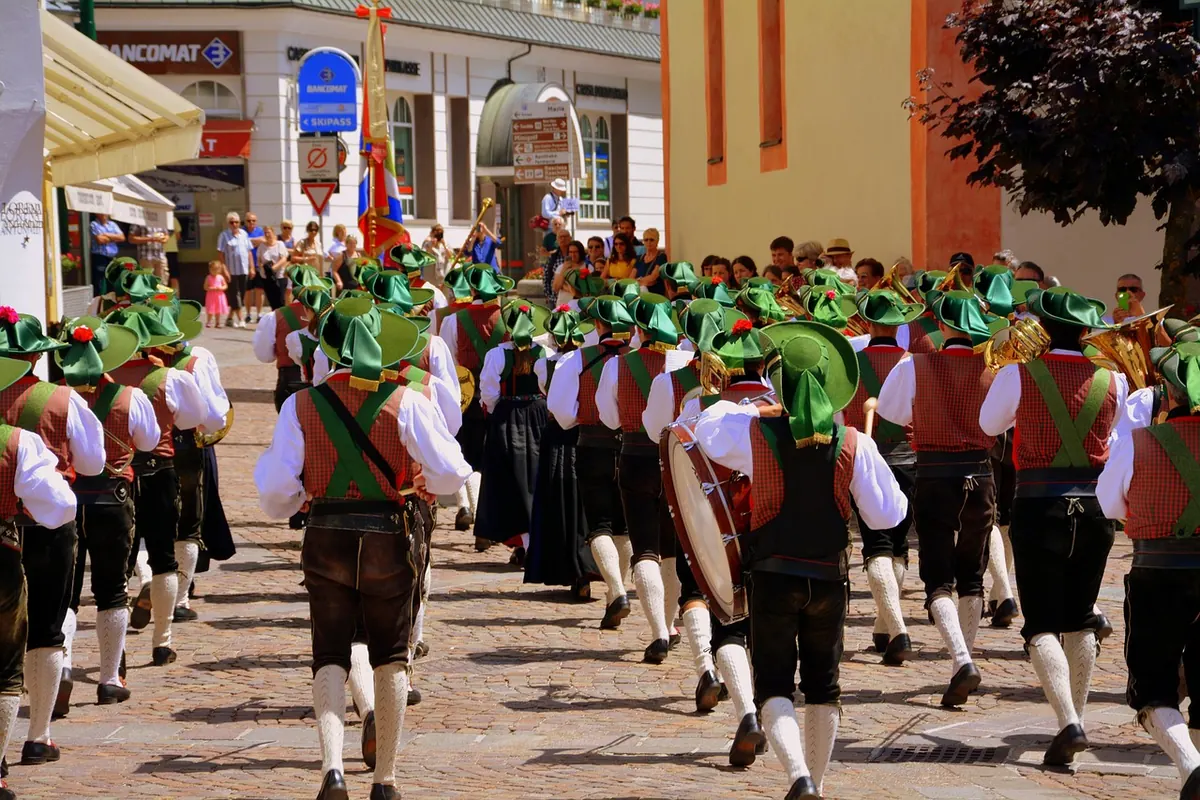
Every year, on the same Sunday, the statue comes out of the side door, turns left, and takes the long way round. There is a shorter path — past the car park, down the hill, straight back into the square — and somebody always asks, usually a visitor, usually halfway up the second climb, why nobody uses it. The answer is never on a map. The route is not a way of getting the statue from one place to another. It is a sentence the village has been saying for a long time, and most people would rather not change the wording.
The Route Is the Argument, Not the Journey
A pilgrimage goes somewhere. A procession goes around. That difference matters more than it first appears. When a community walks a closed loop and ends where it started, it is not travelling; it is drawing a line. Everything inside the line is, for the length of the walk, held.
This is why so many traditional routes follow the outer edge of the old settlement rather than the shortest line through it. The walk passes the last houses, the allotments, the spring, the little industrial shed that used to be a barn, the bend where the road leaves for the next parish. In older European practice, spring processions often traced parish boundaries and blessed the fields at the corners — the same instinct, expressed as a walk. The route says: this is the extent of what we are responsible for. It is a boundary made of footsteps, renewed once a year so that nobody has to argue about it.
Seen this way, the detours make sense. The awkward climb, the loop around the back of the church, the pointless-seeming extra hundred metres along a wall — each of them exists because something is there, or was there, and the walk is how the village keeps it in view.
What the Stops Are For
A procession is not paced evenly. It stops, and the stops are where the meaning is stored. If you want to understand a route quickly, ignore the walking and count the pauses.
- The crossroad shrine. Usually the first stop, and often the least explained. It marks a place where the community historically gathered for other reasons too — a well, a market, a boundary.
- The cemetery gate. The band often falls silent here rather than playing something mournful. Silence reads as respect and needs no rehearsal.
- The plain house with nothing holy about it. If the procession pauses in front of an ordinary front door, ask someone. The answer is almost always a person: a doctor, a teacher, a woman who carried the banner for forty years.
- The bridge or the ford. Water crossings attract blessing in nearly every tradition, and they also happen to be the places where a community's safety was once most at risk.
- The boundary stone or the last lamppost. The point where the village stops being the village. Some routes turn here; others pause, then carry on a little further, which is itself a statement.
Notice that none of these stops require a signboard. They are held in place by repetition and by a handful of people who know why. That is fragile, and it is also why the route survives: it belongs to the people who walk it, not to a committee.
Order, Pace and the Rules Nobody Writes Down
Inside the procession there is a second route, made of hierarchy. In many villages the order runs roughly like this: children in white, then the confraternity or guild with candles, then the band, then the canopy with the statue, then everyone else. The exact arrangement varies from place to place, but the principle does not. Position tells you who is carrying which obligation this year, and the order changes slowly enough that a photograph from fifty years ago still looks familiar.
The pace is equally deliberate. Processions move at the speed of the oldest person carrying something heavy, which is to say slowly, and the slowness is doing work. It gives people time to look at the houses they pass. It allows the rosary or the litany to fit the distance between stops. It also gives the bearers time to manage the awkward bits: the archway where the canopy has to tilt, the corner where the banner catches the wind, the gutter that has to be stepped over in unison.
The shortest way between two points is not the way a village remembers.
Watch the bearers at a tight turn and you will see a small piece of inherited engineering. Someone calls a warning. The front pair shortens its step. The canopy dips, passes, rights itself. Nobody has consulted a manual, and nobody needs to.
The People Who Carry the Route in Their Heads
No village keeps its route in a document. It is kept in about six people, most of them over seventy, and this is the real vulnerability. They know which corner is too tight, which stretch the band always speeds up on, where the second pause goes when the weather is bad, and which year the route was shortened because the bridge was out — and why it went back to the old line the moment the bridge reopened.
If you are involved in organising anything, this knowledge is worth more than any printed programme. Ask early, ask specifically, and write down the answers. Not "the route" — the details. Where exactly does the first pause happen? Who decides when to start moving again? Which house does the procession face when it stops? A single afternoon with two of those people will produce more usable information than a year of guesswork.
When the Route Has to Change
Routes do change. Roads are widened, walls come down, a slope becomes unsafe, a corner becomes impossible to marshal with traffic. None of that is a catastrophe in itself. What damages a tradition is a change made quietly, by people who treat the route as logistics.
A useful rule: change the path, keep the stops. If a stretch of road must be avoided, carry the pauses with you. The shrine, the cemetery gate, the house — those are the load-bearing elements. The bit of asphalt between them can be renegotiated. Where possible, walk the proposed new line with the current bearers before anyone announces anything, and listen when they say it feels wrong. Their objection will usually turn out to be specific and correct.
Two practical notes for anyone organising. Safety and road closures are usually handled with the parish and the local authority, and those conversations need weeks, not days. And if a change is unavoidable, say so in advance and explain the reason. People accept a detour they understand. They resent one they discover on the morning.
Walking It Yourself: A Few Practical Notes
If you are joining a procession as a visitor rather than a participant, a little care goes a long way.
- Arrive early and watch the forming-up. The ten minutes before the start explain more about the community than the hour of walking.
- Walk near the back unless you have been given a place. The front of a procession is not a viewing platform.
- Never cross in front of the statue or the canopy, even if it means waiting at a corner. Step behind, not through.
- Dress as you would for a funeral in the same village. It is not a parade.
- Ask before photographing faces, and put the phone away during the silences.
- Afterwards, find the oldest person who walked the whole route and ask what has changed. Then write it down, with the date.
Do that last one seriously. The route survives because somebody remembers it out loud, once a year, in the same order, past the same doors. Joining in is easy. Keeping the memory accurate is the part that needs willing hands.
Photo: pcdazero / Pixabay