
Common Mistakes When Visiting a Small Village Festival
A village festival is not a scaled-down city event. It is somebody's parish square, somebody's grandmother's kitchen, and a group of volunteers who have been setting up trestle tables since Thursday. That is exactly why it is worth going, and exactly why the usual visitor instincts — arrive late, park close, order fast, leave when bored — tend to land badly. None of this is difficult to get right. It just requires knowing what you are walking into.
What follows is the quiet knowledge that regulars pick up over a few seasons: when the posted time actually means anything, where your car should not go, how the food line really works, and which moments in the evening are not yours to interrupt.
The Poster Is a Suggestion, Not a Schedule
"Starts at 7pm" on a hand-stapled poster means the grills are lit at 7pm. It does not mean food appears at 7pm. Expect the first plates somewhere between thirty and sixty minutes later, and expect the queue to form before that. Arriving at 7:05 and being annoyed about the wait is the single most common mistake visitors make, and it is a self-inflicted one.
The better strategy is to arrive early enough to park calmly, walk the village once while it is still light, and find the ticket window before there is a line at it. Then settle in. Village evenings build slowly and end late — the band plays after the food, the raffle after the band, and the last tables are cleared by people who have been on their feet for twelve hours. Leaving at 9:30 because "it seemed to be winding down" usually means missing the part locals talk about all winter.
Two timings worth asking about
- When the food actually starts. Ask a volunteer at the ticket booth, not another visitor. They know the real hour.
- When the procession or ceremony passes. If there is one, it reorganises the whole square for twenty minutes. You want to be seated, not carrying a tray through it.
Parking Is the First Test of Manners
In a village of four hundred people, there is no car park — there is a field, a widening in the road, and a strip of gravel beside the football pitch. Follow the direction of whoever is waving a torch. That person is usually a volunteer in their sixties who has given up their evening to keep the road clear, and they are not being obstructive; they are keeping the one lane open for an ambulance.
What not to do: leave the car across a farm gate, on the grass verge that is actually someone's driveway, in front of a garage door painted with a name, or in the turning circle at the end of a dead-end lane. Tractors and delivery vans still need to move at 11pm. If the only space left requires a three-point turn through a flowerbed, drive on and walk five minutes. The walk in, past lit windows and kitchens, is often the nicest part of the night.
Nobody in the Serving Line Is a Customer
The people handing you a plate of pasta are the same people who built the stage. There is no manager to complain to, no substitution options, and no reason to ask whether the sauce can come without garlic. The menu is what it is because it was decided in March and cooked in quantities for six hundred.
Two habits mark you out as a guest rather than a problem. First, share tables. If seats are open, ask before sitting and accept that you may be eating beside people whose dialect you will not follow — that is the point. Second, clear your own plates to the washing point when you are done. Nobody will ask you to, and everyone will notice.
A small festival runs on borrowed labour. Every plate you carry back is two minutes of somebody's evening returned to them.
Bring Cash, and Bring It Small
Many village festivals work on a ticket or token system: you buy strips of paper at one window, then exchange them for food and drink at another. This exists because handling cash at eight serving stations at once is a nightmare, not because anyone is being awkward. Find that window first.
Bring notes that are easy to break and a pocket of coins. Card readers are increasingly common but not guaranteed, and the mobile signal in a stone-built square can be politely described as unpredictable. The nearest cash machine may be a fifteen-minute drive away and empty by Saturday night. Keep your tokens visible — a torn ticket in a back pocket is a small tragedy at 10pm.
Reading the Room
Every village has two or three moments where the evening stops being a party. A religious procession, a blessing, the band playing the anthem, a minute of silence for someone recently gone. You will recognise them by the sudden quiet and the way people put down their glasses. Stand if others stand. Do not keep talking, do not walk through the middle of it, and put the phone away.
Photographs deserve a thought too. Pictures of the square, the lights, the food, the band from behind: all fine. Close portraits of people's faces, or of children, without asking: not fine. A smile and a raised camera is enough of a question; a nod is enough of an answer. And if someone waves you away, take it gracefully rather than explaining that you are only being friendly.
Small courtesies that go a long way
- Learn the local greeting and use it, even badly. It changes the tone of every exchange.
- Buy a raffle ticket, even if you do not want the ham.
- Do not move furniture between areas to make your own group's table bigger.
- Ask before taking the last of anything, and take no more than you will eat.
- Say thank you to the people at the grill on your way out. It is a long night.
Leaving Well
The last twenty minutes are the hardest work of the whole festival: stacking chairs, folding tables, sweeping, washing up in cold water. If you have eaten well and stayed late, offering a hand for ten minutes is entirely normal and never unwelcome. If you cannot stay, at least leave your spot as you found it — glasses at the collection point, rubbish in the right bin, chairs where they belong rather than in a cluster around your table.
Before You Set Off: A Short Checklist
Arrive earlier than the poster suggests and expect food later than you would like. Follow the torch-waving volunteer and accept the walk. Carry cash in small notes and find the ticket window before you queue. Share your table, clear your plates, and stand when the square stands. Buy a raffle ticket, learn the greeting, ask before photographing faces, and offer a hand at the end if you are still there.
Do those things and the evening changes character. You stop being a visitor watching a village from the edge of the square and become, for a few hours, someone the volunteers nod to on the way past. That is the whole reason these festivals still exist — and the easiest thing in the world to get right.
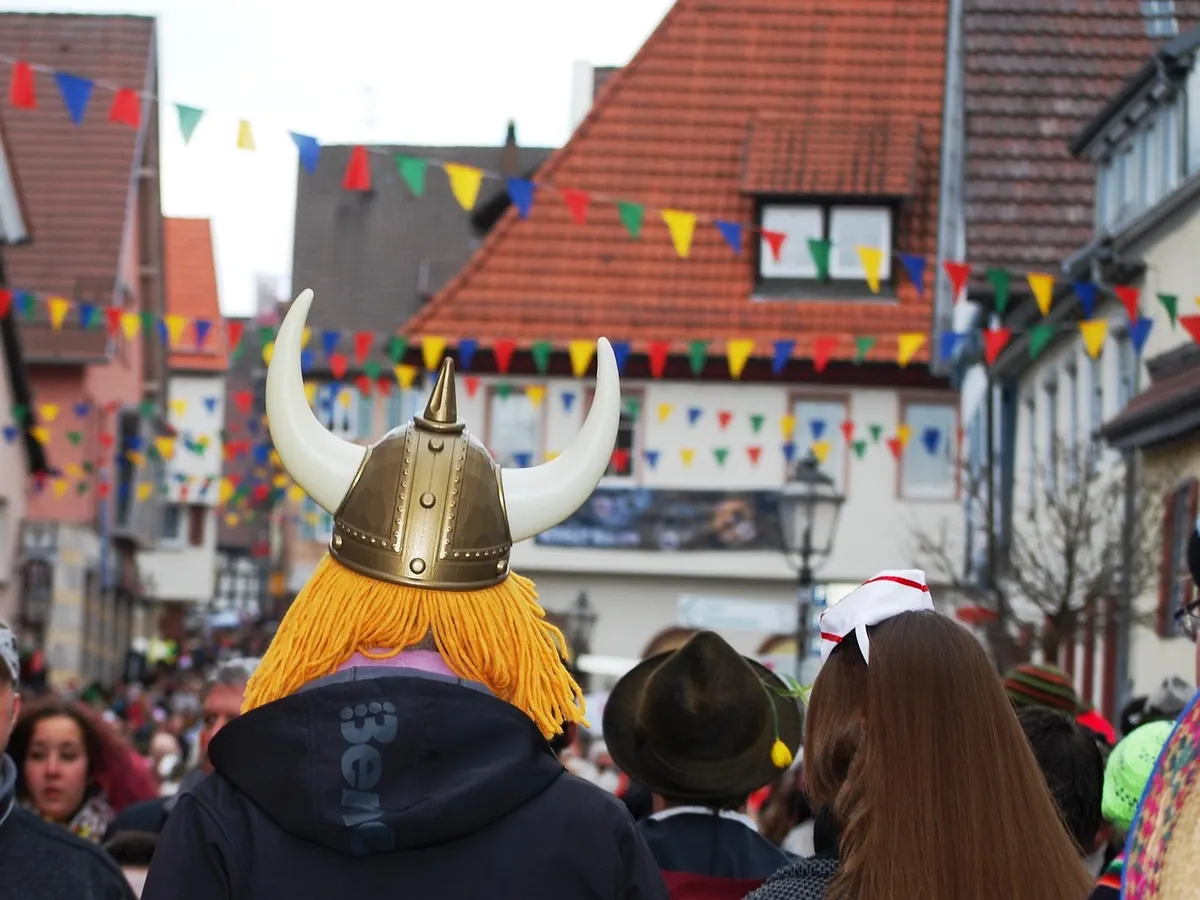
Photo: Gaertringen / Pixabay